
Home / Investment sales / Shopping centers
Selling a shopping center in Oregon
A larger center is priced on its main tenants and on how its leases depend on one another. We work through those questions with you before launch, and a principal stays on the sale through closing.
What a buyer will ask about a larger center
Each of these is answered in the offering memorandum or the due diligence folder before the listing goes live.
Which tenant brings the traffic, and how long is that lease?
Buyers start with the tenant that draws customers to the center, whether or not the lease calls it an anchor. We put that lease's term, renewal options and rent at the front of the offering memorandum, because the rest of the rent roll is read against it.
Do any leases depend on another tenant staying open?
Some leases let a tenant pay less rent, or leave, if a named tenant closes. These co-tenancy clauses are easy to miss in a long lease file. We read for them during pre-marketing and disclose them, so a buyer does not find them in due diligence and reopen the price.
How much of the rent rolls over during a buyer's hold?
We lay out the expiration date and renewal options of every lease in one schedule, so a buyer can see when space may turn over and plan for it.
What does the site include, and who maintains it?
Several buildings, pads and shared parking each raise questions about access, maintenance and who pays for what. We assemble the site plan, the leases and any recorded agreements that govern parking and access into the due diligence folder.
Pricing a shopping center
We price a shopping center the way we price every listing: from the income in the leases, the comparable sales, and the buyers we expect to compete. You see that work before a listing agreement is signed, and we do not inflate the range to win the assignment.
Listed above the market
A listing that launches above the market loses its first weeks, which are the weeks when the most buyers are paying attention.
Chasing the market
Buyers see the days on market, the price comes down in steps, and the seller ends up negotiating from a weaker position than a market price would have given them on day one. We call that chasing the market. Pricing to meet the market matters most when the market is moving. A price set where the market was, rather than where it is, is already behind on the day the listing goes live.
Priced to meet the market
The market is a range, not a single number. We set the price inside that range, toward its upper end. Pricing to the market is what creates competition. Competition is what lets us hold the price through due diligence.
For an Oregon center, a written broker opinion of value is the place to start. It shows the comparable sales and the income math behind the number.
Who runs the sale, and how it runs
Nick or Olivia runs your sale from the first conversation through closing. There is no handoff to a junior team. Every listing follows the same five phases, adjusted to the property.
Pre-marketing
Financials, the offering memorandum, photography and the buyer list are prepared and reviewed with you before launch.
Marketing campaign
The listing goes live, a tracked email campaign begins, and we call every likely buyer.
Market assessment
Offers are analyzed, the strongest buyers are engaged, and the purchase and sale agreement is negotiated.
Escrow
Title, earnest money and due diligence are managed through the removal of contingencies.
Closing
Ownership transfers. For a seller in a 1031 exchange, the 45-day identification period starts here.
You receive a written marketing report every week your property is on the market. How we run a sale
How buyers are reached
We build the list of likely buyers before launch. When the listing goes live it is posted on internal and external platforms, a tracked email campaign begins, and we call every likely buyer. As offers come in, we build a competitive market around the offering.
The buyer for Oakway Landing in Eugene came from our direct outreach and market relationships. The sale closed 56 days after the contract was signed.
Multi-tenant centers we have closed
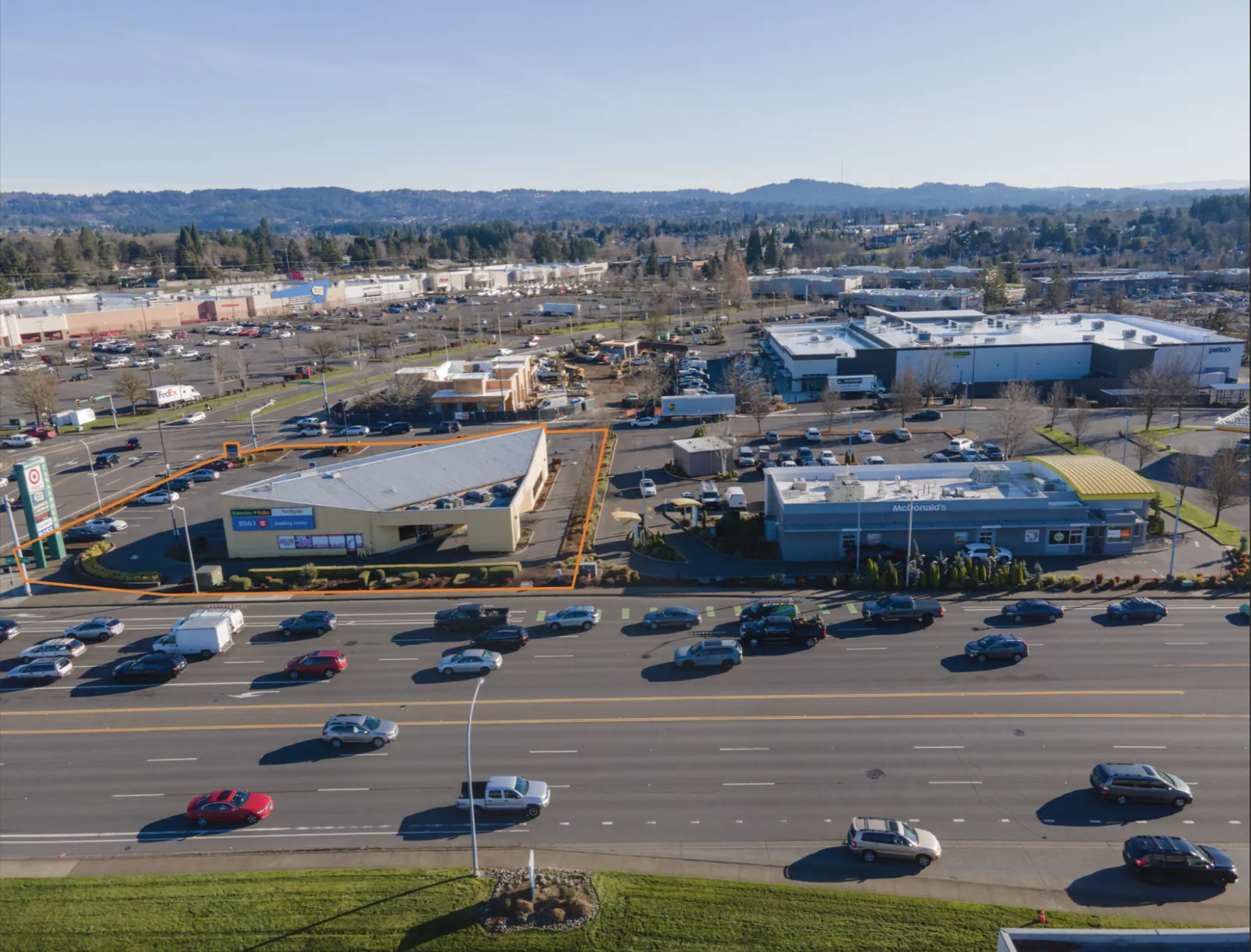
Oakway Landing is an 80,996-square-foot center on 5.53 acres in Eugene, with four buildings. When it was marketed, it was fully occupied by seven tenants on NNN leases, and most of the leasable area had been occupied by the same businesses for over 15 years.
-
St. Helens Shops
$4,142,000

Our transaction was a complex, eight-figure, multi-tenant retail sale. Nick and Olivia guided us seamlessly from marketing through closing and ultimately delivered the perfect buyer. This was clearly not their first rodeo.
What would your retail property sell for today?
A written broker opinion of value, built on current comparable sales and real buyer demand. No charge and no obligation. If the number does not support a sale, we will tell you that.
Prepared and signed by Nick Bushong or Olivia Franssen. A broker opinion of value is not an appraisal.
What the opinion covers
- Recent comparable sales for your property type
- Tenant credit and lease structure
- The buyers active for it today
- A value range we would stand behind